
This chapter is from The Family Translation Gap, written by Lim Wan Tsau and published by Piqolo Press (2026).
Hidden in Plain Sight
The hotel had done everything right.
Its architecture won awards. The lobby featured artwork inspired by the destination's history and culture. Its menus celebrated local ingredients sourced from nearby farms and fisheries. Behind the scenes, teams had spent years refining their sustainability and community initiatives—reducing waste, conserving resources and strengthening ties with the local community. Every detail had been carefully considered. Every space had a story worth telling.
Yet eight-year-old Callum barely noticed any of it.
During the three-day stay, he hurried through the lobby, never stopping to look around. He walked past the heritage displays without reading a word. At breakfast, he was far more interested in his muffin than learning where its ingredients came from. When his family checked out, the hotel's carefully crafted experiences had largely passed him by.
Weeks later, if you asked Callum's parents what they remembered— they would probably talk about the property's stories, the quality of the service, the calm atmosphere that made the stay so memorable. Callum's answer would be very different. He remembered the chocolate muffin waiting for him every morning. The lazy afternoons spent splashing in the pool. And watching cartoons from the oversized bed before bedtime.
At first glance, this seems entirely normal. Children are drawn to different things than adults. Of course they are.
Yet this simple observation points to a much larger question: If hotels invest enormous amounts of time, money and effort into building meaningful guest experiences - Why do so many of those experiences remain invisible to younger guests?
If hotels invest enormous amounts of time, money and effort into building meaningful guest experiences - Why do so many of those experiences remain invisible to younger guests?
Over the years, I have had the privilege of working with hotels, resorts and attractions that create extraordinary guest experiences. Some have fascinating histories. Others tell their story through remarkable culinary traditions, inspiring sustainability initiatives or a deep connection to the local culture and natural environment. Many are filled with passionate hospitality professionals who care deeply about creating memorable stays. Yet I began to notice a recurring pattern. The experiences that adults found meaningful were often the very experiences children struggled to access.
The experiences that adults found meaningful were often the very experiences children struggled to access.
A hotel might proudly celebrate its architectural heritage, but younger guests leave without discovering why the building matters. A property might invest heavily in sustainability, yet children seldom understand the impact behind the initiatives. A destination may be rich with local culture, wildlife and traditions, but younger guests often engage with only a small part of what makes the place unique. The experiences are there. The value exists. The stories are waiting to be told. Somehow, they fail to connect.
I call this the Family Translation Gap.
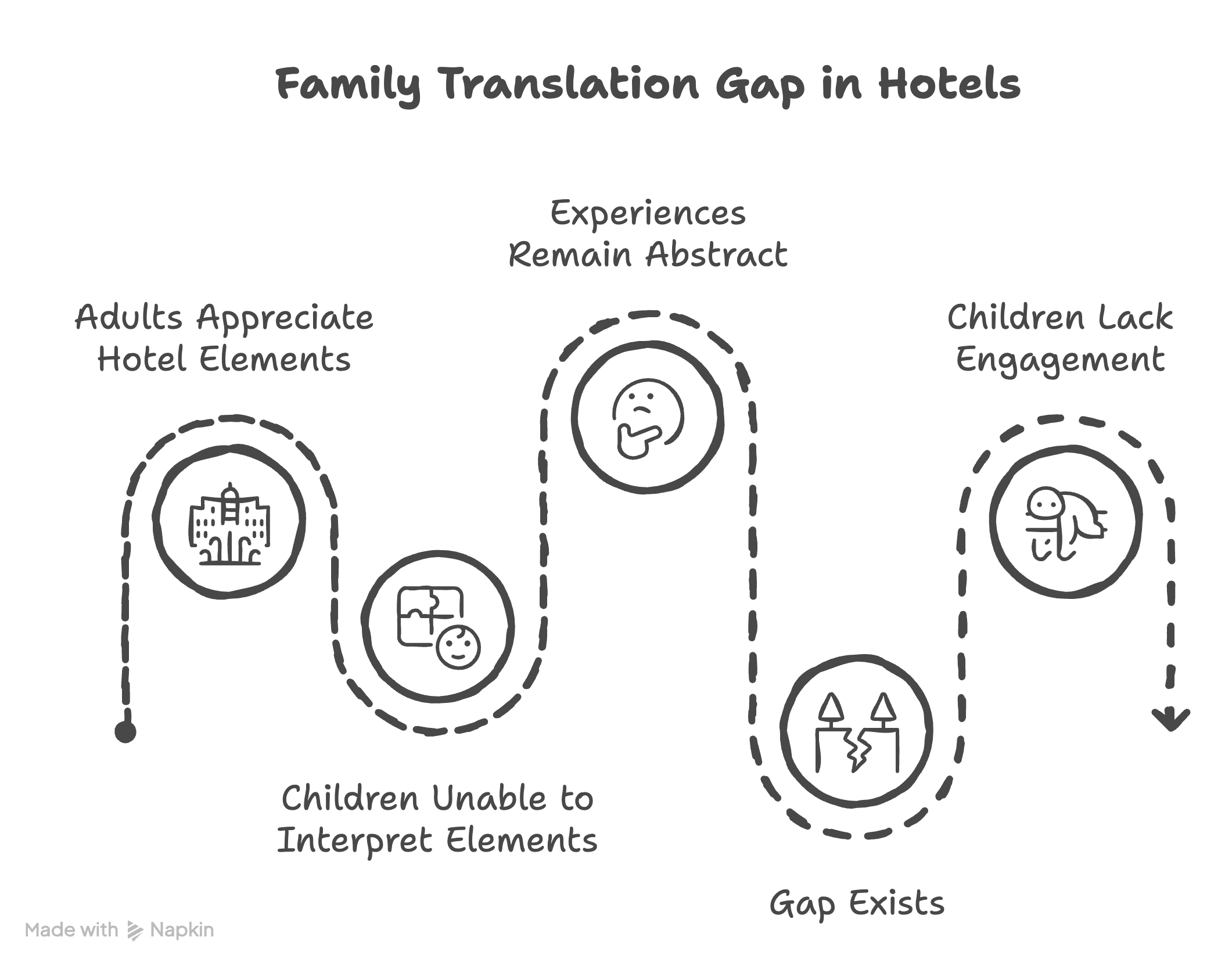
The Family Translation Gap is the disconnect between what a hotel intends to share and what a child is actually able to experience. It appears whenever a meaningful experience is available but not accessible. It exists when adults can see the significance of something, but children cannot yet interpret it for themselves. In many cases, the problem is not that the experience lacks value. The problem is that the experience has never been translated into a form that younger guests can easily discover, understand or participate in.
The Family Translation Gap is the disconnect between what a hotel intends to share and what a child is actually able to experience.
This distinction is important because it challenges one of the hospitality industry's most common assumptions. When hotels think about improving their family offering, the conversation often turns towards facilities. New play areas. Larger kids' clubs. More in-room entertainment. The latest gaming consoles. While these investments can certainly add value, they are not always the answer. In fact, many properties already possess everything they need to create memorable family experiences. What they lack is not infrastructure. What they lack is translation.
Adults naturally interpret experiences through a lifetime of accumulated knowledge and context. When an adult sees a restored building facade, they understand the history behind it. When they dine at a restaurant specialising in local cuisine, they appreciate the connection to the destination. When they see sustainability in action, they recognise the broader environmental story it represents. Children approach the world differently. They are still building the mental frameworks that help adults assign meaning to what they see. Without some help, many experiences remain hidden in plain sight.
Children approach the world differently. They are still building the mental frameworks that help adults assign meaning to what they see. Without some help, many experiences remain hidden in plain sight.
The most successful family experiences are not necessarily the most entertaining. They are the ones that make meaningful experiences accessible to younger guests. They reveal the stories behind the architecture. They invite children to participate in sustainability. They bring local culture to life through relatable characters and adventures. Together, they give younger guests a greater part to play in the family’s stay.
This matters today more than ever. As a new generation of parents reshapes family travel, the experiences families value most are increasingly those that help them connect with the places they visit—not simply stay in them.
Many properties already possess everything they need to create memorable family experiences. What they lack is not infrastructure. What they lack is translation.
This is exactly what this book is about. It introduces a different way of thinking about family hospitality—one that focuses less on building new facilities and more on helping families engage with the experiences that already exist. To explore this idea, the book is organised into five parts. Together, they answer these important questions.
- Why the Family Translation Gap exists.
- What experiences can be translated.
- When translation has the greatest impact.
- How hotels bring translation to life.
- Who makes translation happen across the organisation.
Together, they offer a practical approach to creating richer family experiences without the need to build more.
Continue to the next chapter to discover the next idea in The Family Translation Gap.
Or return to the Table of Contents at any time to navigate to another chapter.