


A FAQ Guide to the Rise of Digital OS&E
Digital amenities are emerging as a new category within hotel OS&E (Operating Supplies and Equipment) — one focused less on physical infrastructure and more on experience, engagement and emotional connection.
Digital OS&E allows hotels to create experiences that extend beyond the room itself — through storytelling, interaction, discovery and shareability. From AR activations and digital city guides to gamified family experiences and personalised guest content, these touch points help properties create stronger emotional engagement without major physical infrastructure.
As hospitality becomes increasingly experience-led, digital amenities are giving hoteliers a flexible way to adapt to changing guest expectations.
What are digital amenities in hotels?
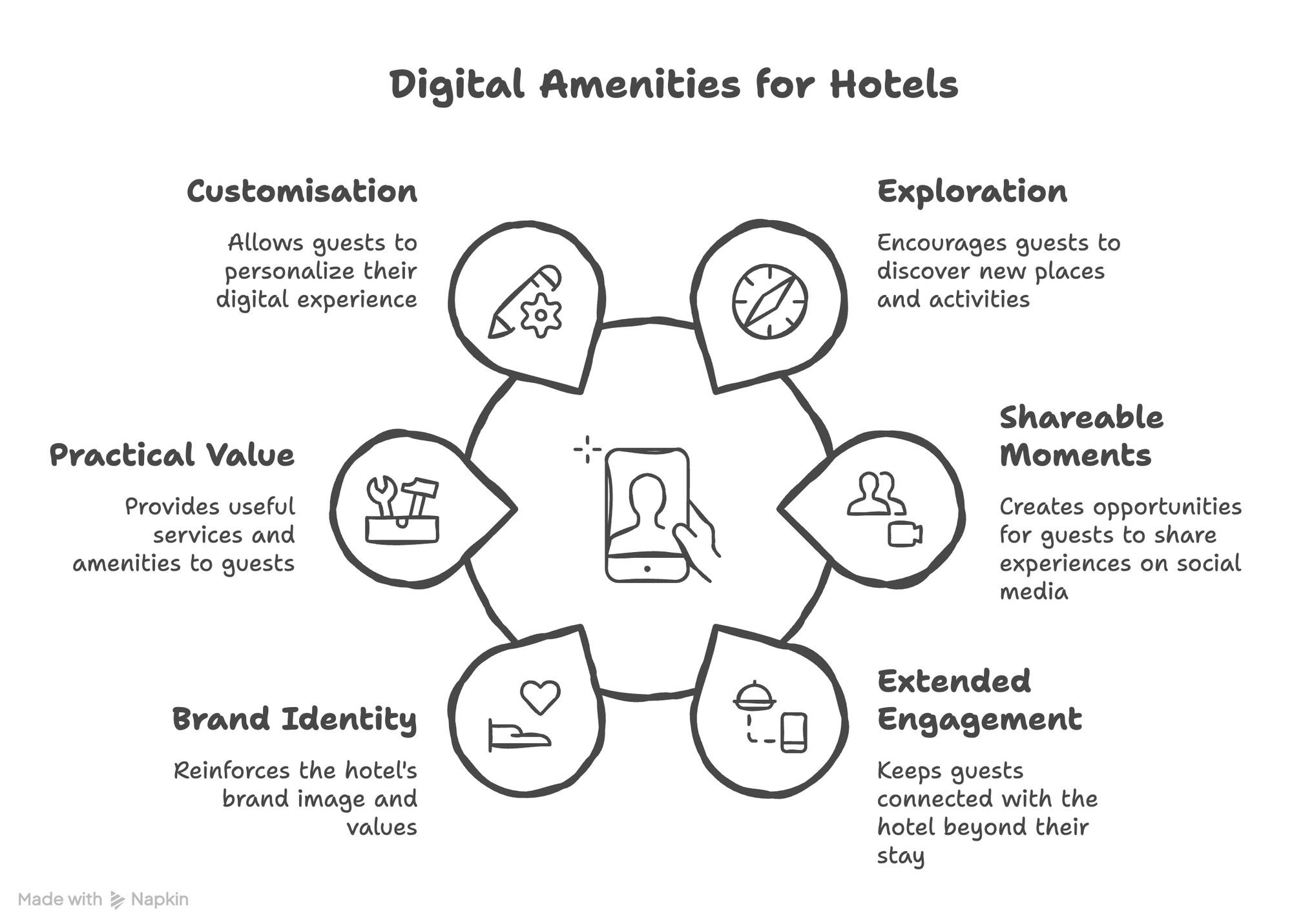
Digital amenities are branded standalone digital experiences, tools or content designed to enhance a hotel stay. Unlike traditional amenities, they require little to no physical infrastructure yet deliver high emotional and experiential value. They often:
- Encourage exploration and discovery
- Create shareable moments
- Extend guest engagement beyond the stay
- Reinforce brand identity
- Provide practical value to guests
- Are easily customisable
Digital amenities are branded standalone digital experiences designed to enhance a hotel stay.
Digital amenities are increasingly becoming part of modern hotel OS&E because they can be updated, customised and scaled far more easily than physical touch points.
Why are digital amenities becoming more important in hospitality?
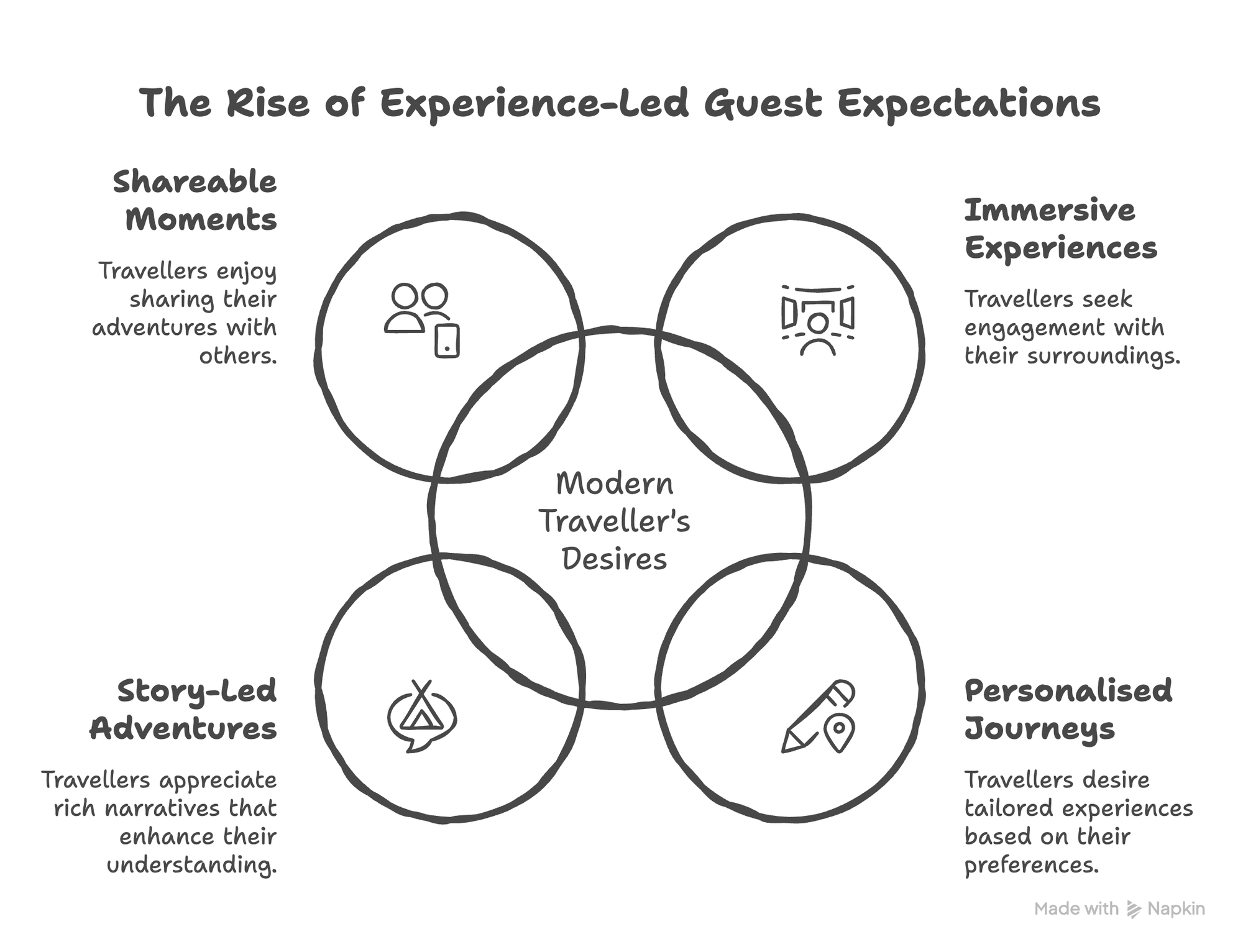
Guest expectations are changing. Modern travellers increasingly value experiences that feel:
- Immersive
- Personalised
- Story-led
- Shareable
At the same time, hotels are looking for ways to create stronger differentiation without major renovation costs or operational complexity.
Digital OS&E helps bridge this gap by allowing hotels to create meaningful moments through lightweight digital experiences that complement the physical property. They also align well with how guests already behave — using their phones to explore, document and share their journeys.
How do digital amenities fit into hotel OS&E?
Traditionally, OS&E focused heavily on physical operational items such as linens, guest supplies and room accessories. Digital OS&E expands this idea into experiential digital touch points that support the guest journey emotionally, visually and interactively.
For example:
- A luxury hotel may provide an AR art tour tied to the property’s art collection
- A beach resort may offer a digital marine-life discovery trail
- A family hotel may offer playful AR mascot photo experiences for children
- A city hotel may create interactive digital scavenger hunt for children
- A heritage property may use QR storytelling moments around the building
These touch points become part of the hotel’s broader guest experience ecosystem.
What are examples of digital amenities hotels can implement?
Digital amenities can take many forms depending on the hotel’s brand positioning, audience and guest journey. The strongest digital OS&E experiences are usually bespoke to the property — designed around its story, location, architecture, culture or guest experience rather than using generic digital features.
Examples include:
- AR photo and selfie experiences
- Branded digital postcards
- QR-based discovery trails
- Digital scavenger hunts
- Bespoke audio experiences
- Gamified family activities
- Digital art or heritage storytelling
- Digital keepsakes and memory books
- Seasonal or event-based digital activations
Some hotels also use digital OS&E to enhance specific moments within the stay — such as check-in, dining, poolside experiences, destination exploration or post-stay engagement.
The strongest digital OS&E experiences are usually bespoke to the property.
Because these experiences are highly flexible and customisable, they can often be adapted to reflect a hotel’s location, story, architecture, culture, guest demographic or even the changing seasons and annual celebrations.
Do digital amenities replace physical amenities?
No — they complement them.
Physical amenities still play an important role in comfort, hospitality and operational standards. Digital OS&E works best when it enhances or extends the physical experience.
For example:
- A printed kids’ activity book may unlock AR experiences
- A physical cocktail menu may include QR storytelling elements
- A heritage hallway may trigger digital historical content
- A wellness space may connect to guided digital audio experiences
The goal is not to replace physical hospitality, but to deepen engagement around it.
What types of hotels benefit most from digital OS&E?
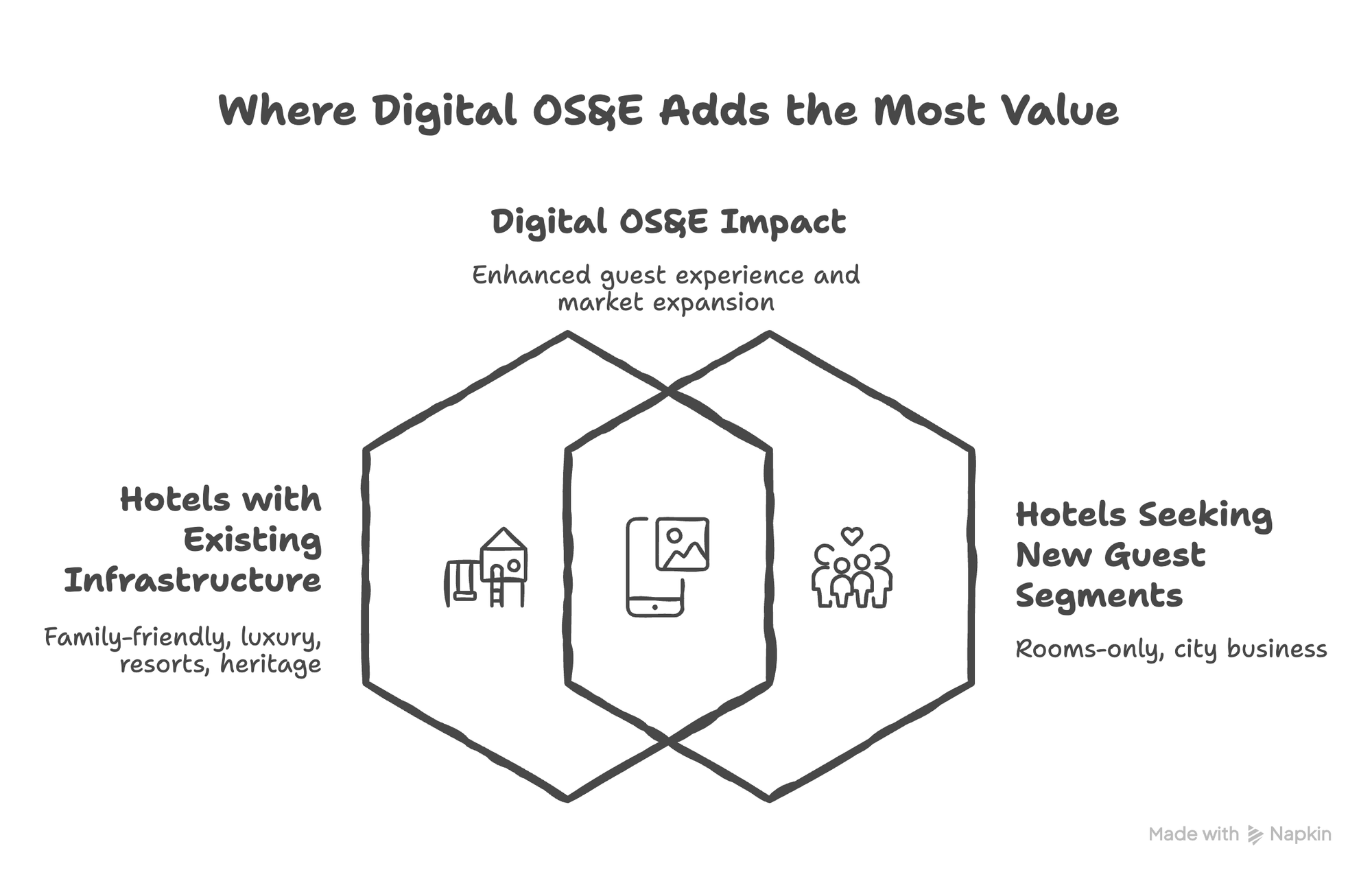
Digital OS&E is commonly implemented within:
- Family-friendly hotels
- Luxury lifestyle properties
- Resorts
- Heritage hotels
However, digital amenities can be especially valuable for hotels looking to expand into new guest segments without major renovation costs like:
- Rooms-only hotels
- City business hotels
These properties can use digital OS&E to create more lifestyle-driven, family-friendly or destination-led experiences without major renovation costs or large-scale operational changes.
How can digital amenities improve guest engagement?
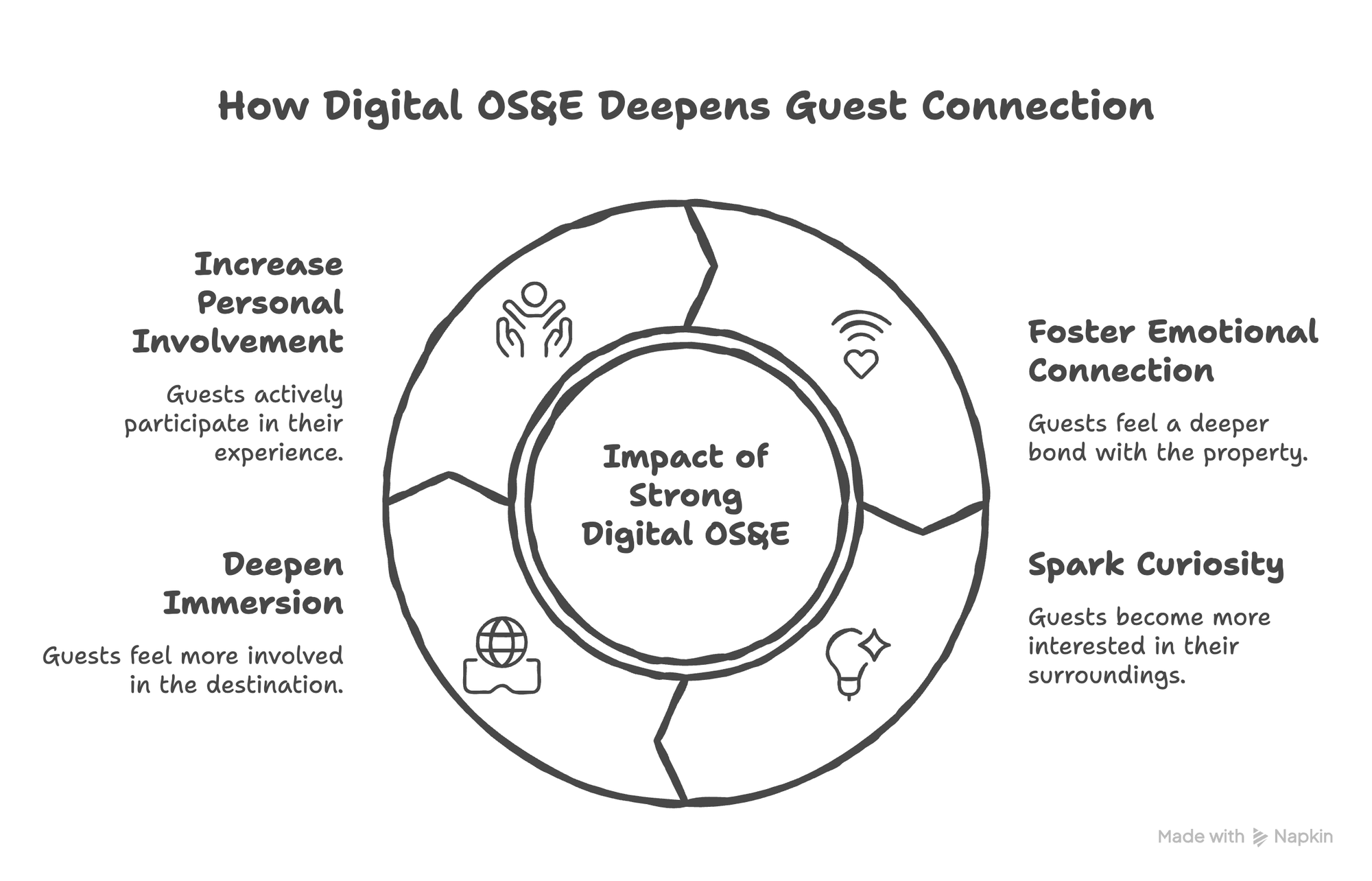
Digital amenities encourage guests to interact more actively with the property. Instead of simply consuming the stay passively, guests become participants in the experience.
Strong digital OS&E helps guests feel:
- More emotionally connected to the property
- More curious about their surroundings
- More immersed in the destination
- More personally involved in the experience
This often results in stronger emotional recall because guests remember what they actively engaged with.
Can digital amenities encourage social sharing?
Yes — and this is one of their strongest advantages.
Many digital amenities naturally create “shareable moments” because they are visual, interactive and participatory.
Examples include:
- AR selfie experiences
- Branded digital postcards
- Interactive destination moments (digital statues etc)
Importantly, these experiences often feel more organic than traditional marketing because guests choose to share them voluntarily.
This allows hotels to generate social visibility through experience design rather than direct promotion.
Are digital amenities expensive to implement?
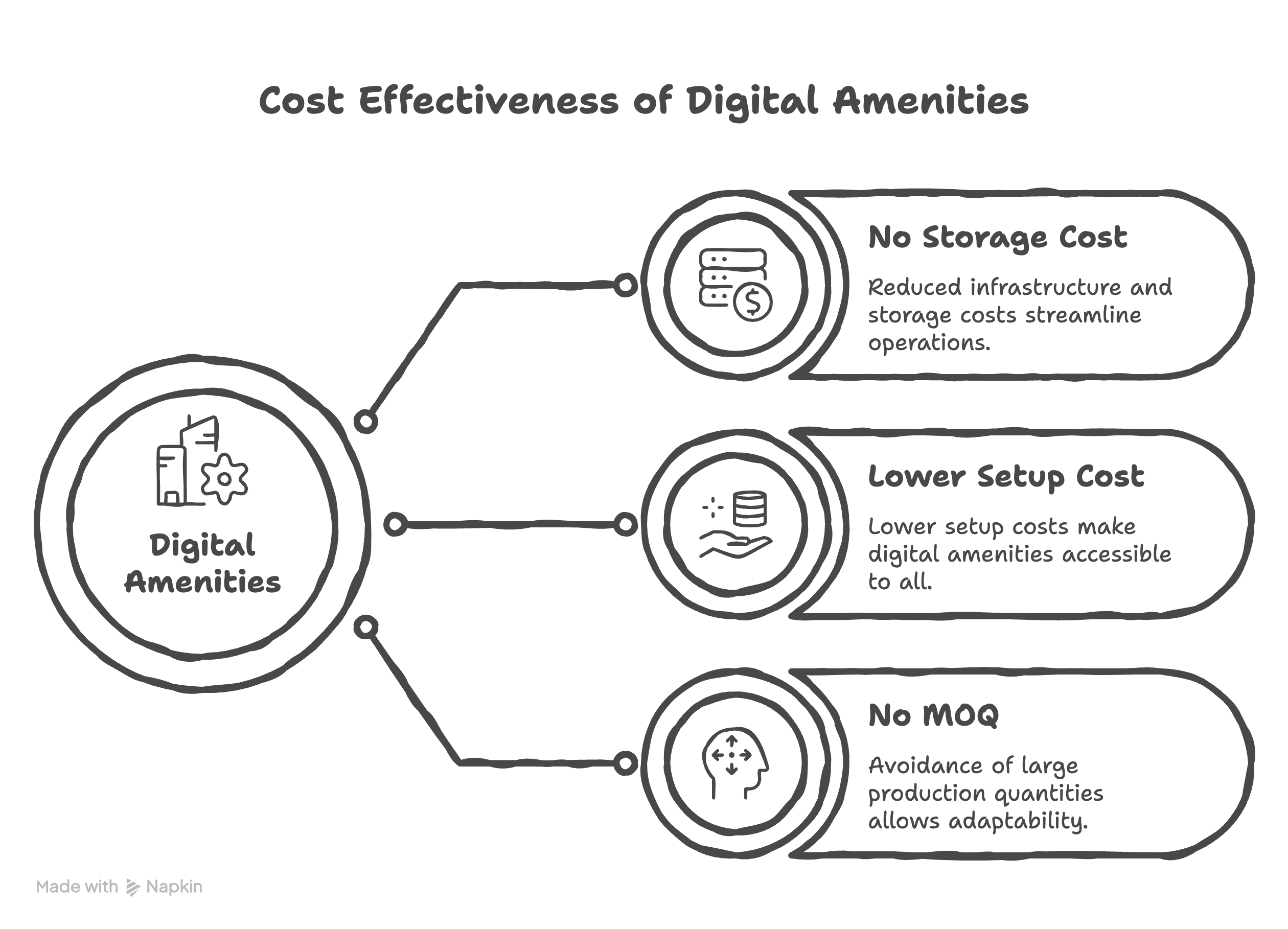
Not necessarily.
Compared to traditional physical OS&E, digital amenities often require less infrastructure and storage, involve lower setup costs and avoid the need for large production quantities, while still delivering strong experiential and emotional value to guests.
Digital amenities are often:
- Fast to deploy
- Easy to update
- Scalable
- Highly customisable
- Low in operational complexity
Many digital experiences can also be refreshed seasonally or adapted for campaigns, partnerships and events without significant additional cost.
What makes digital OS&E different from traditional hotel technology?
Traditional hotel technology is often designed to improve operational efficiency.
For example:
- Booking systems
- Check-in systems
- Payment systems
- Digital menus and ordering systems
- Smart room keys and controls
These systems are typically complex, operationally critical and often require significant coordination across teams, including onboarding, staff training, technical integration and ongoing support.
Digital OS&E is less about complex technology and more about creating meaningful guest moments.
Its primary role is not operational efficiency, but engagement, storytelling, discovery and memorability. Compared to traditional hotel technology, digital amenities are easier to set up and faster to implement.
The difference is important: One improves hotel operations. The other improves how the hotel is experienced and remembered.
How can hotels customise digital amenities to reflect their brand identity?
The most effective digital amenities are deeply connected to the property’s identity. This could include:
- Local culture
- Architecture
- Culinary concepts
- Nature and environment
- Heritage stories
- Design language
- Brand personality
For example:
- A desert resort may create celestial storytelling experiences
- A heritage hotel may use historical character guides
- A marine resort may create ocean-themed AR discovery trails
- A city hotel may build neighbourhood exploration games
Customisation is what transforms digital OS&E from generic technology into meaningful hospitality storytelling. As mentioned, the strongest digital OS&E experiences are usually bespoke to the property.
Can digital amenities help hotels stand out without renovation?
Yes — and this is one of the biggest strategic advantages.
Many hotels already have strong architecture, views, dining concepts or locations. The challenge is often not the physical product itself, but how guests experience and interpret it.
Digital OS&E allows hotels to layer interaction, discovery and storytelling onto existing spaces without changing the underlying infrastructure.
This makes it possible to create meaningful differentiation through experience design rather than expensive physical expansion.
What are some family-friendly digital amenity ideas for hotels?
Some examples include:
- Branded destination selfie lenses/ postcards
- QR on-site scavenger hunts
- Interactive historic neighbourhood trails
- Digital F&B stamp passports
- Gamified dining challenges
- AR mascot selfie experiences
These experiences work especially well because they transform ordinary hotel spaces into playful environments for discovery and imagination.
What is the future of digital OS&E in hospitality?
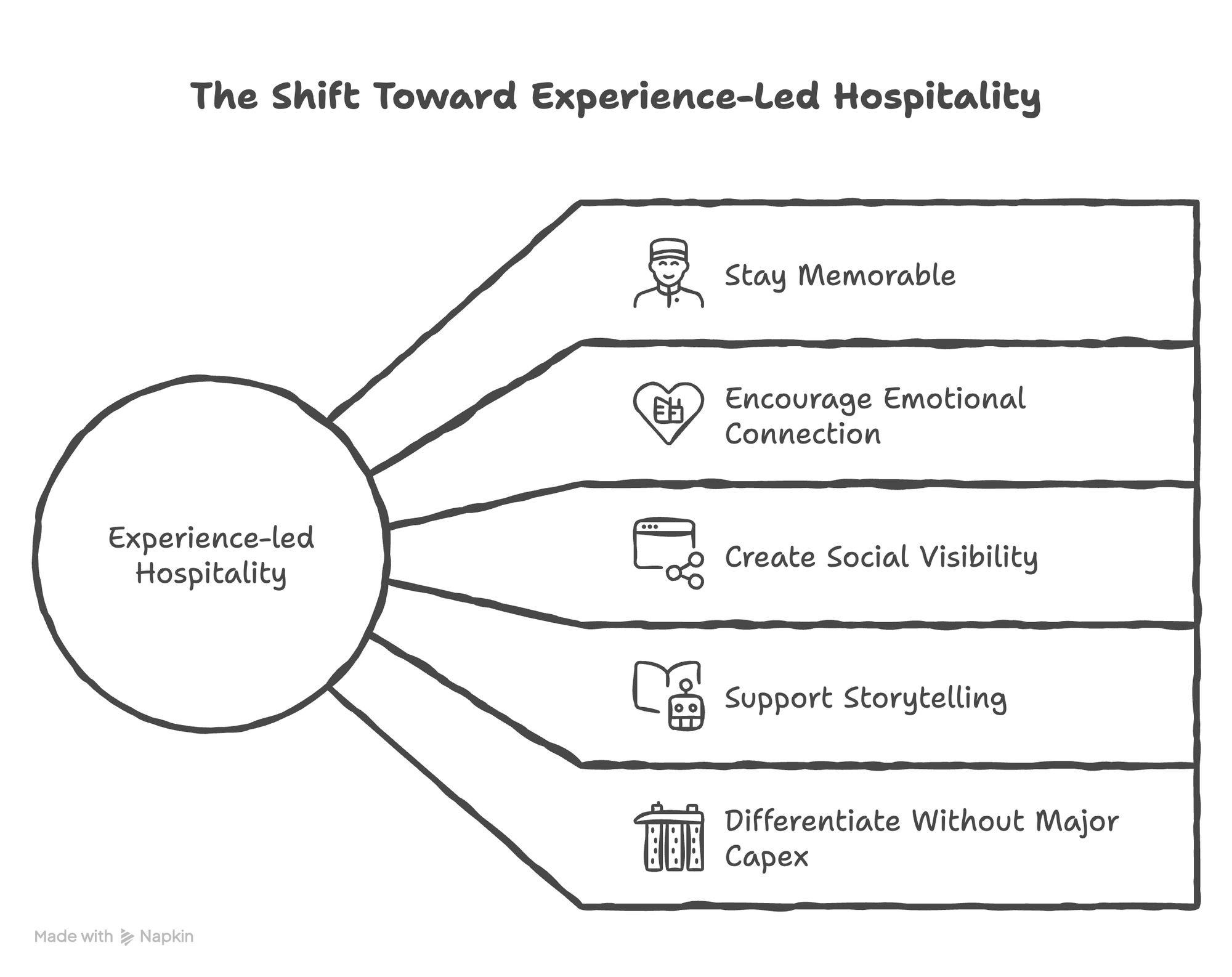
Digital OS&E will likely become increasingly integrated into how hotels design guest engagement.
As hospitality becomes more experience-led, hotels are looking for ways to:
- Stay memorable
- Encourage emotional connection
- Create social visibility
- Support storytelling
- Differentiate without major capex
Digital amenities offer a flexible and scalable way to achieve this.
The future is unlikely to be fully digital or fully physical.
Instead, the strongest hospitality experiences will combine physical spaces with thoughtfully designed digital layers that make the stay feel more interactive, immersive and memorable.
How can hotels get started with digital amenities?
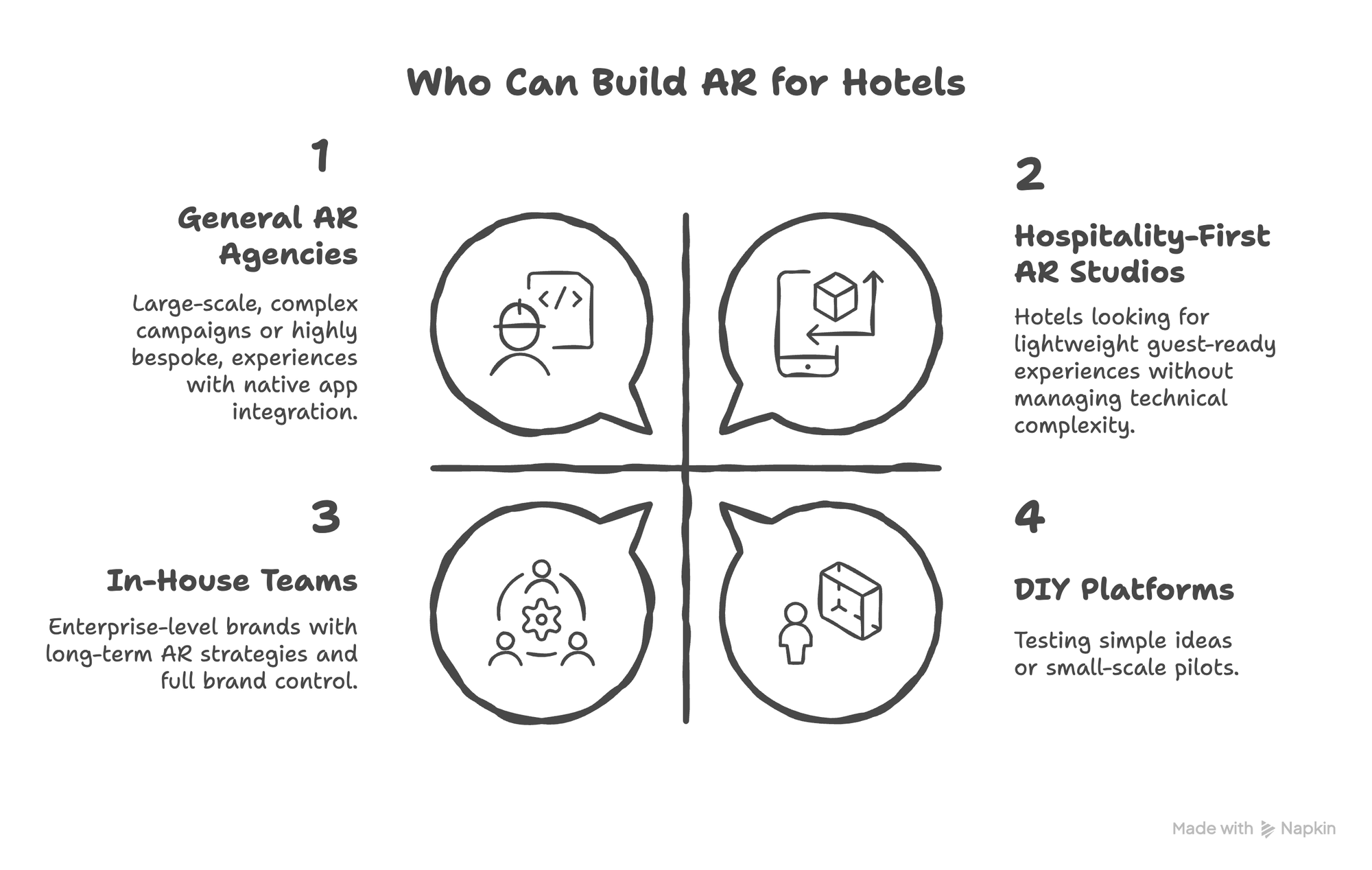
Hotels can approach digital amenities in several ways depending on their goals, budget and desired level of customisation. Some work with general creative or AR studios to develop highly bespoke digital apps and experiences, while others experiment internally using online DIY tools and no-code platforms to create simple touch points such as AR photo experiences.
Others choose to work with hospitality-focused studios that specialise in creating guest-ready digital amenities specifically for hotels and resorts. For many properties, this is often one of the easiest ways to launch fast, high-quality digital experiences without having to manage heavy technical complexity internally.
Get Started on Your Own Bespoke Family-Friendly Experience
If you need a hand shaping and telling your property’s story, Piqolo Press is here to help. Our AR experiences can bring each property's unique story to life, creating meaningful touch points that enhance guest engagement and leave a lasting impression long after their stay.
Let’s craft something extraordinary together—because every exceptional property deserves a great story. Get our latest pricing information via the link below OR fill up the form below:
 Piqolo World
What We Do for Hotels and Hospitality Brands
- Bespoke Kids’ Activity Books for Hotels and Tourist Attractions
- Storytelling for Hospitality Brands
- Family-friendly Mascot Design for Hotels
- Web-Based AR Experiences for Hotels and Event Venues


