


Translating a family experience often involves an upfront investment. There may be research to conduct, stories to uncover, activities to develop, illustrations to commission, assets to design or digital experiences to build. But that investment doesn't have to start again every season.
Some of the most valuable family translation assets can keep working long after they are created. A well-designed activity can be enjoyed differently by hundreds of children. A hotel story can remain relevant for years. A festive experience can return every Christmas. And an evergreen printed asset can be given new life simply by changing a card, prompt or digital layer.
The key is to design every family translation asset with longevity in mind from the start.
By designing family translation assets around things that endure, repeat or invite different responses, hotels can invest once in the creative foundation and reuse, refresh and rediscover it over time.
Here are six principles for creating family translation assets that last:
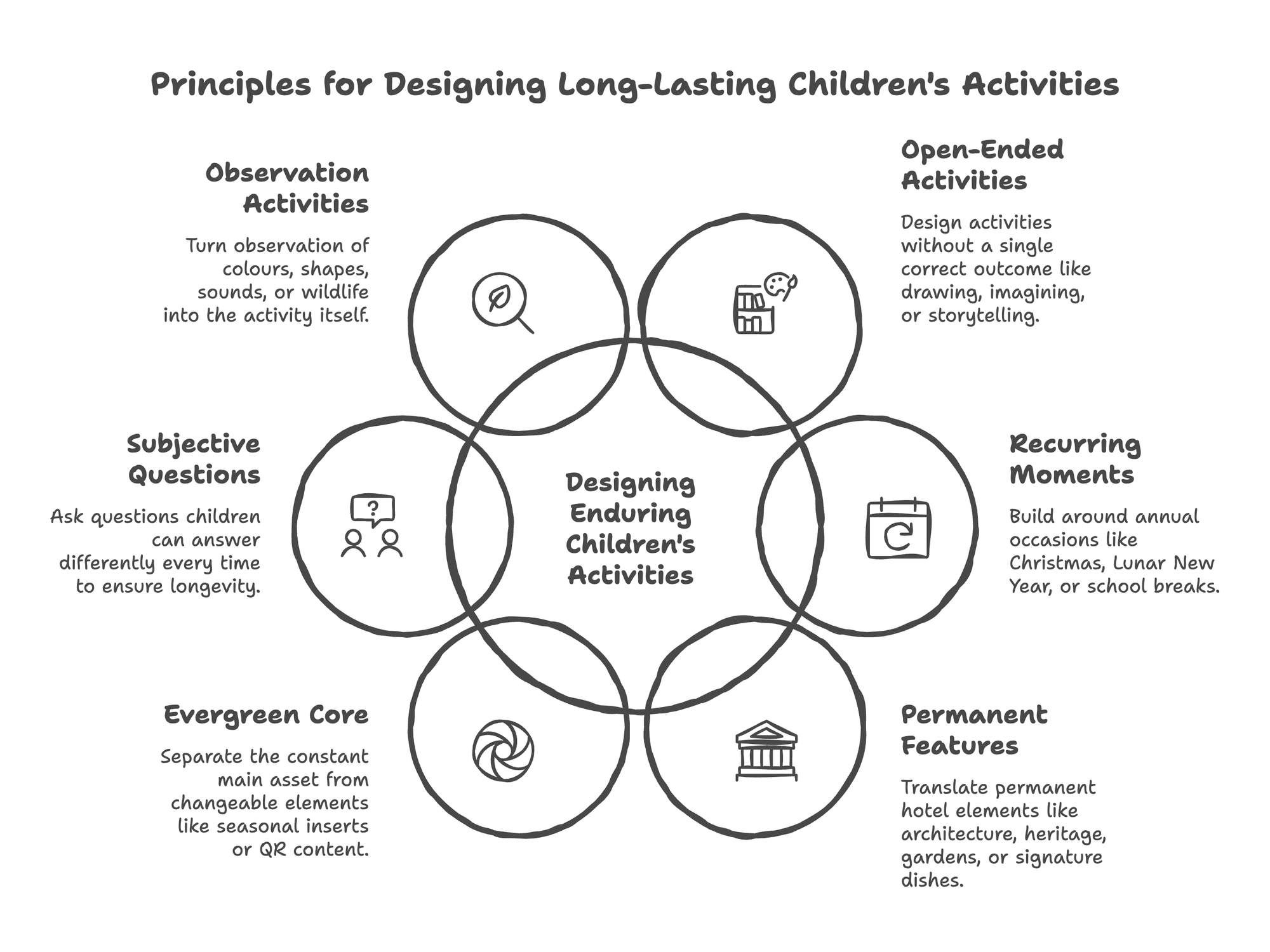
1. Keep Creative Activities Open-Ended
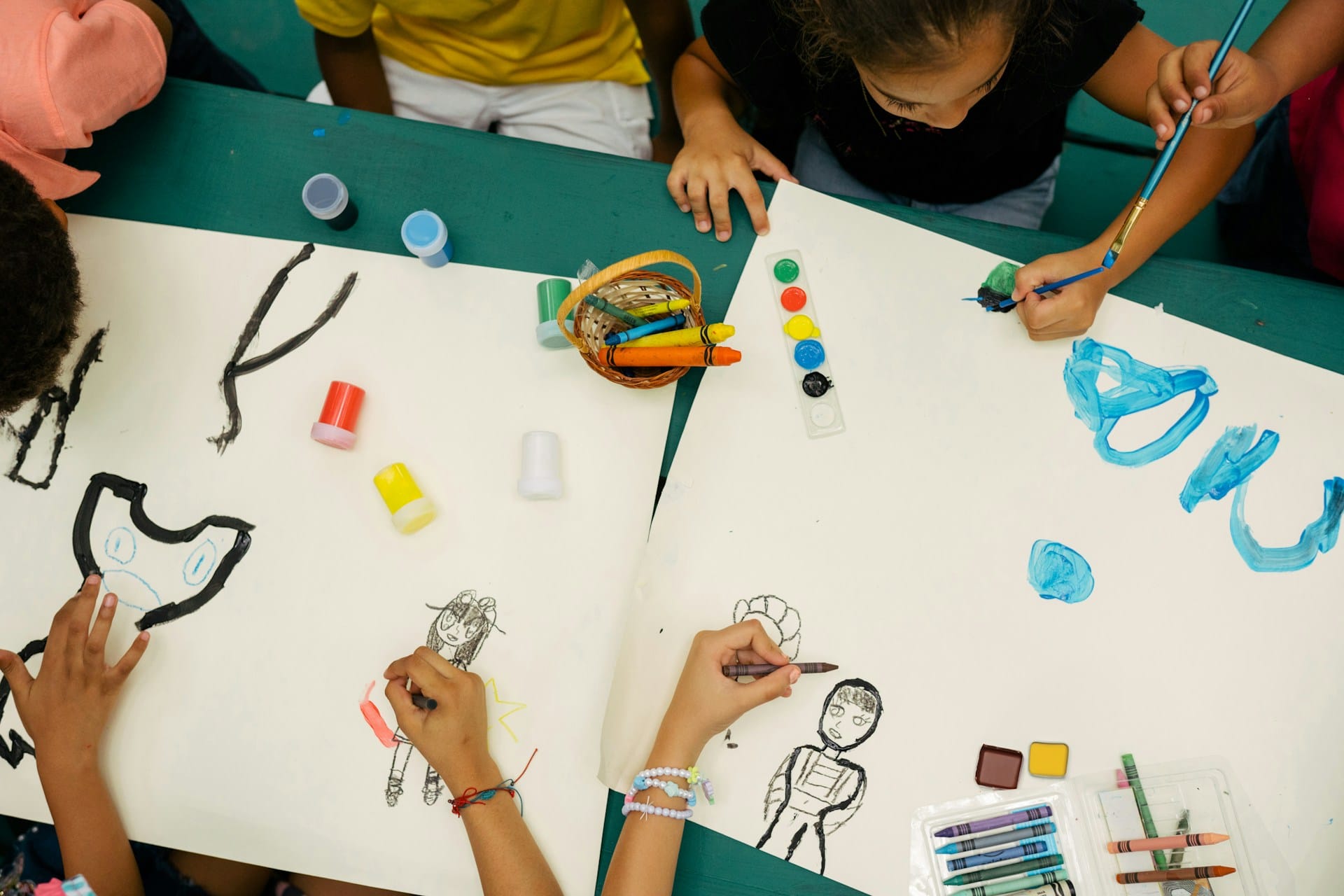
An activity with one correct answer can quickly become something a child completes once and puts aside. Open-ended activities work differently. Drawing, designing, imagining, storytelling and creating allow every child to produce their own response — and even the same child might respond differently on another visit.
Instead of asking children simply to colour a picture of the hotel, for example, invite them to design their dream hotel room, invent a dessert for the restaurant or imagine what a historic guest might have packed in their suitcase. The creative framework stays the same, but children continually create new outcomes. That makes a relatively simple asset capable of delivering hundreds of individual experiences.
The creative framework stays the same, but children continually create new outcomes.
2. Build Around Recurring Annual Moments
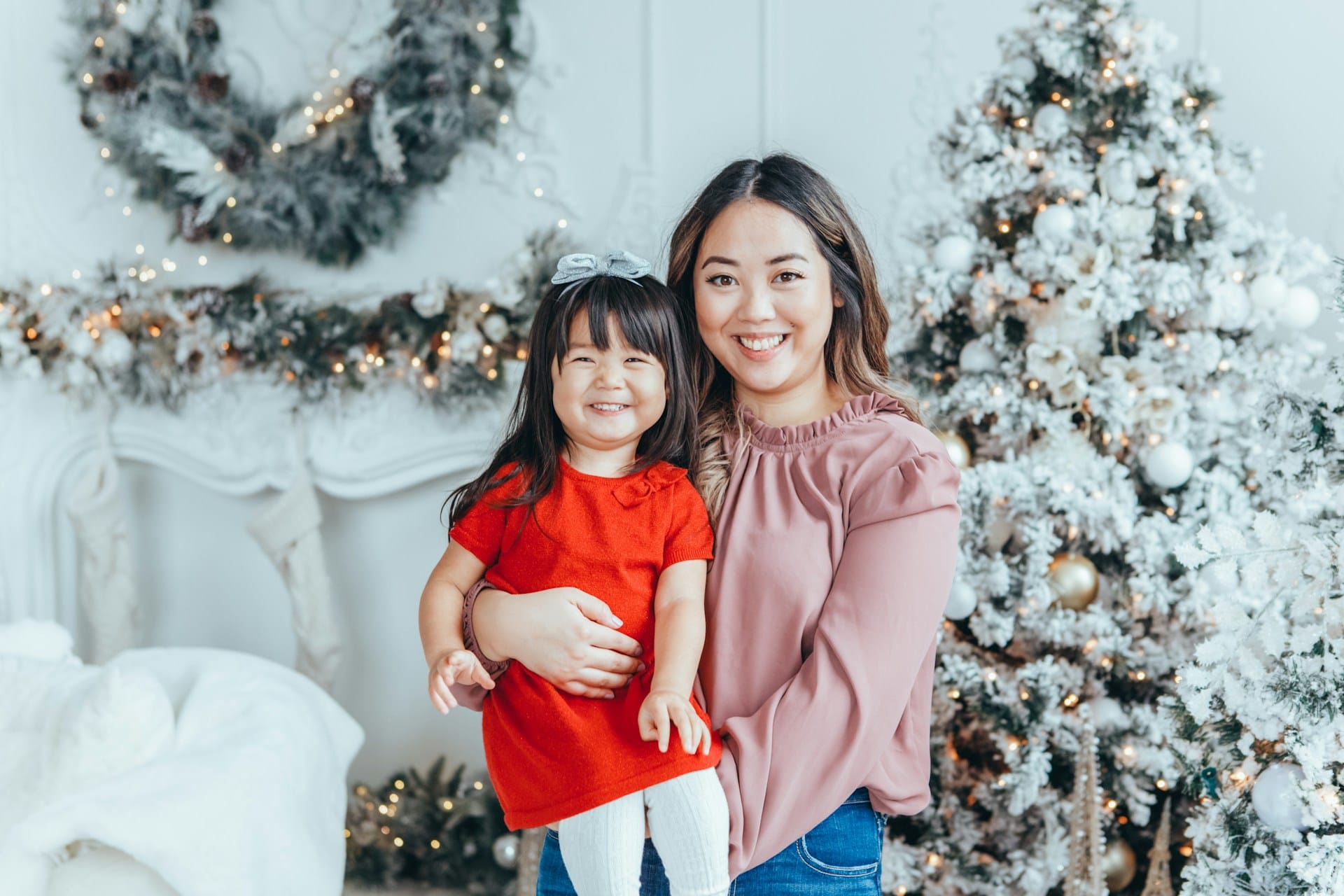
Not every seasonal experience needs to be designed from scratch. Christmas, Lunar New Year, Easter, Halloween and local festivals return year after year, making them ideal foundations for reusable family translation assets. A Christmas hotel discovery trail, for example, might require significant creative work the first year — developing the concept, illustrations, clues and design — but much of that investment can be reused the following Christmas. Dates, prizes, participating venues or individual challenges can be refreshed without rebuilding the entire experience.
Think of recurring occasions as opportunities to create family experience assets the hotel can bring back rather than campaigns that disappear when the season ends.
3. Translate What Is Permanent About the Hotel
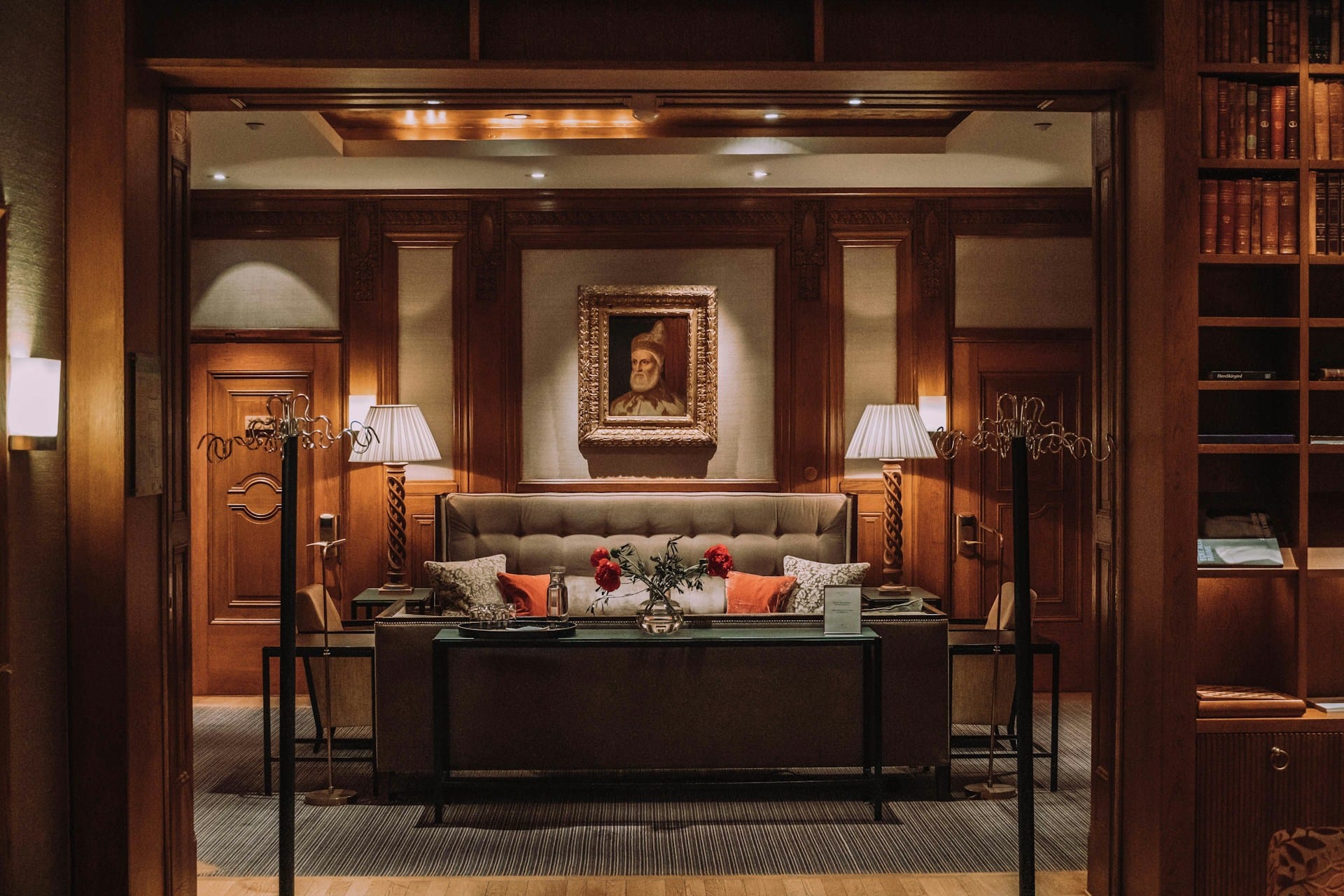
Some of the best evergreen content is already inside the hotel. Architecture, heritage, artworks, signature dishes, views, design details and long-standing traditions can remain relevant for years. Translate these permanent features into children's discoveries and the resulting family assets can have a similarly long life.
A collection of hotel artworks could become a set of creative prompts inviting children to look closer. A signature dessert could inspire an activity that helps children discover its ingredients, story or origins. Even a long-standing hotel ritual can be translated into a simple story or activity that helps children understand and participate in it. When the source material lasts, the family experience built around it can last too.
The more enduring the source of the experience, the less pressure there is to continually invent new content.
4. Design Around Questions Children Can Answer Differently Every Time
The questions you ask can determine how reusable an activity becomes. A factual question such as “What year was the hotel built?” has one answer. Once a child knows it, there is little reason to answer it again. But ask “What was your favourite discovery today?” and the answer can change with every visit.
Questions about observations, opinions, imagination and choices invite children to bring themselves into the experience. Factual learning still matters, but combining facts with questions that encourage personal responses gives children a more active role in the discovery — and gives the activity a much longer life.
The best questions don’t just have answers. They invite new answers and perspectives every time.
5. Turn Observation Into the Activity
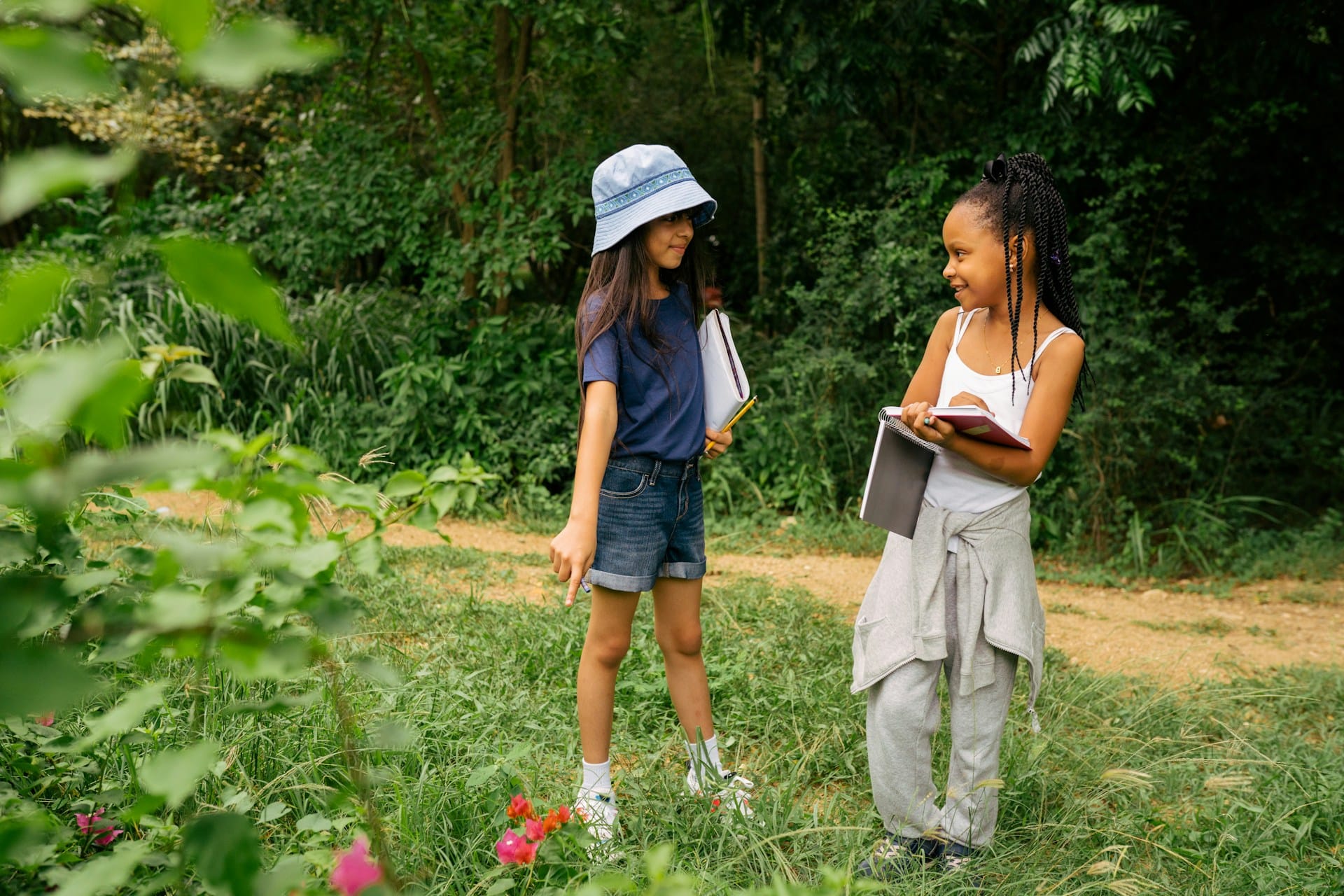
Sometimes, the hotel itself can provide the activity. Rather than continually creating new things for children to do, give them reasons to look more closely at what is already around them. Invite them to spot colours in an artwork, listen for different sounds in the garden, find unusual shapes in the architecture, identify ingredients at breakfast or look for wildlife around the property.
Observation-based activities can be used again and again because the experience comes from what children notice, not simply what is printed on the page. The time of day, season, surroundings and even what catches a child's attention can change the discovery, allowing the same prompt to create a different experience each time.
When discovery comes from observation, the same place can become a different experience every time.
6. Separate the Evergreen Core From the Changeable Content
Evergreen doesn't have to mean unchanging. One of the most effective approaches is to create a permanent foundation with smaller elements designed to change. A hotel discovery booklet might contain evergreen stories and activities while seasonal challenge cards are inserted throughout the year. A permanent family trail might lead children around the same locations while the questions change. A printed card might remain unchanged while its QR code opens digital content that can be refreshed. This modular approach allows hotels to keep an experience feeling current without repeatedly paying to recreate the entire asset.
The larger creative investment remains in place; only the lighter, more flexible layer needs updating.
Make the Creative Investment Work Harder
Evergreen family translation isn't about creating an experience once and never touching it again. It's about making smarter decisions about where the creative investment goes.
Researching a hotel's stories, developing an activity concept, commissioning illustrations, designing an experience or building a digital layer all require time and budget. But when the foundation is built around something enduring, repeatable or adaptable, that investment can continue working across hundreds or even thousands of family stays.
(W)hen the foundation is built around something enduring, repeatable or adaptable, that investment can continue working across hundreds or even thousands of family stays.
The question to ask when developing the next family experience isn't simply, “What can we create?” Ask, “How long could this keep creating discovery?”
Design the right foundation, and the answer could be years.
Get our New Family Hospitality Book
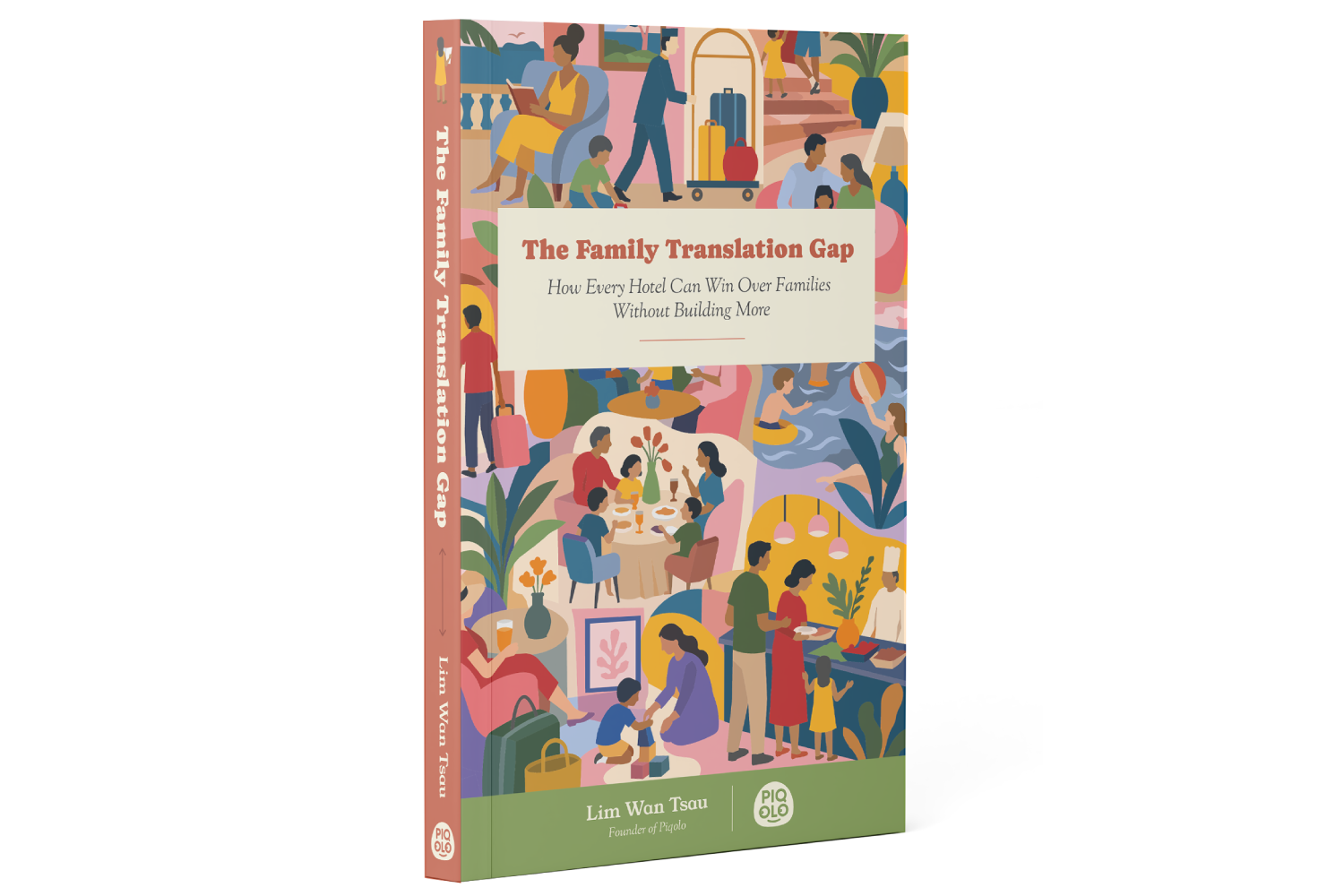
The Family Translation Gap is for hospitality professionals looking to create genuine differentiation in family hospitality without relying on high-capex renovations.
Get Started on Your Own Bespoke Family-Friendly Experience
 Wan Tsau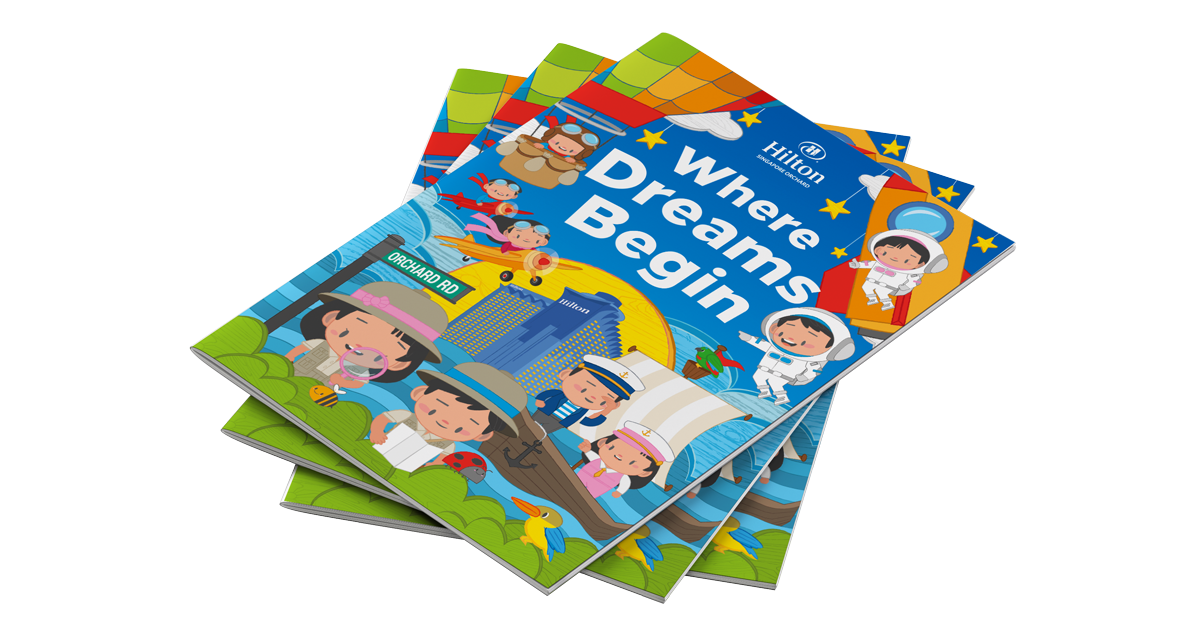
 Wan Tsau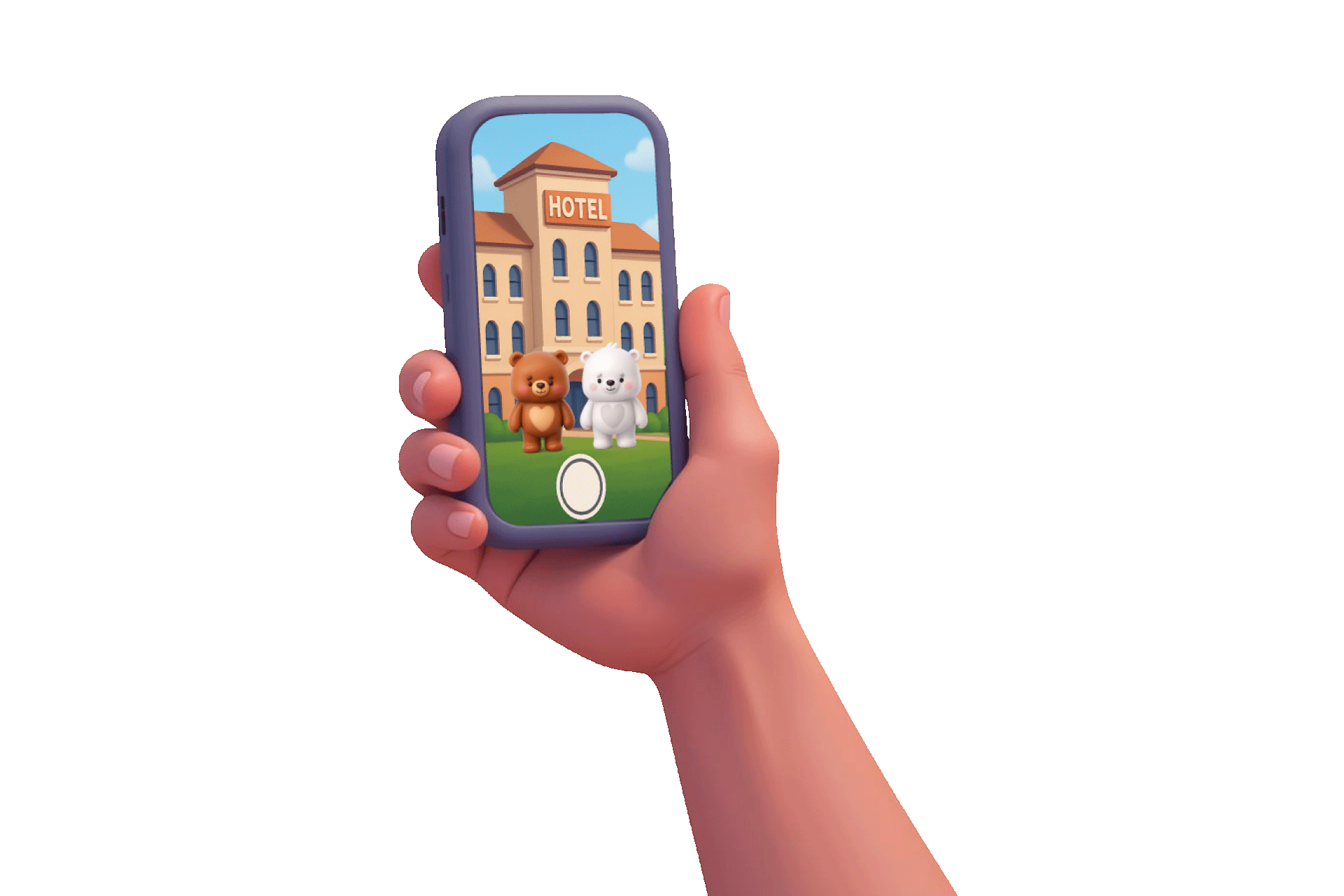
If you need a hand shaping and telling your property’s story, Piqolo Press is here to help. Our bespoke kids activity books and AR experiences can bring each property's unique story to life, creating meaningful touch points that enhance guest engagement and leave a lasting impression long after their stay.
Let’s craft something extraordinary together—because every exceptional property deserves a great story.
Let's Chat!
Fill up the contact form below OR drop us an email here.
What We Do for Hotels and Hospitality Brands
- Family Experience Strategy & Translation Consulting
- Bespoke Kids’ Activity Books for Hotels and Tourist Attractions
- Storytelling for Hospitality Brands
- Family-friendly Mascot Design for Hotels
- Web-Based Digital Amenities for Hotels and Event Venues


